Understanding the Different Parts of Medicare
For many people, Medicare can be confusing. Between Parts A, B, C, and D, it is easy to become overwhelmed. Understanding the basics can help you make informed decisions about your healthcare and avoid costly mistakes.
Medicare is a federal health insurance program primarily for people age 65 and older. It also covers many individuals under age 65 who qualify for Social Security Disability Insurance (SSDI) benefits after completing the required waiting period, as well as certain individuals with specific medical conditions.
Each part of Medicare provides different types of coverage and there are many options to consider when determining which parts you wish to select.
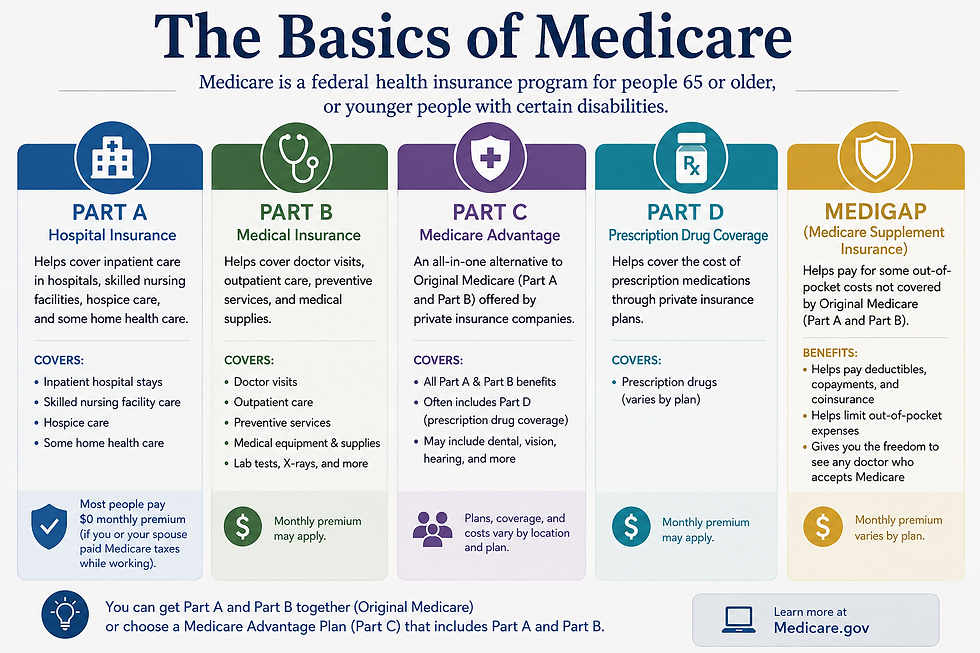
Medicare Part A – Hospital Insurance
Medicare Part A helps pay for inpatient hospital care and other facility-based services. It generally covers:
· Inpatient hospital stays
· Skilled nursing facility care following a qualifying hospital stay
· Hospice care
· Certain home health services
Most people do not pay a monthly premium for Part A because they or their spouse paid Medicare taxes while working.
It is important to remember that Part A does not cover every expense associated with a hospital stay. Deductibles, coinsurance, and coverage limits may still apply.
Medicare Part B – Medical Insurance
Medicare Part B covers many outpatient medical services and preventive care. This includes:
· Doctor office visits
· Specialist appointments
· Outpatient surgery
· Laboratory tests
· Diagnostic imaging (such as X-rays and MRIs)
· Durable medical equipment
· Preventive screenings and vaccinations
· Physical and occupational therapy
Unlike Part A, Part B generally requires a monthly premium. Beneficiaries are also responsible for deductibles and typically pay a percentage of the cost of covered services.
Medicare Part C – Medicare Advantage
Medicare Part C, also known as Medicare Advantage, is an alternative way to receive your Medicare benefits through a private insurance company approved by Medicare.
Most Medicare Advantage plans include:
· Hospital coverage (Part A)
· Medical coverage (Part B)
· Prescription drug coverage (often Part D)
· Additional benefits not included in Original Medicare, such as dental, vision, hearing, fitness programs, and wellness services
Each Medicare Advantage plan has its own provider network, costs, and rules regarding referrals and prior authorization. It is important to review the details of each plan carefully before enrolling.
Medicare Part D – Prescription Drug Coverage
Medicare Part D helps pay for prescription medications.
Prescription drug coverage may be purchased as a stand-alone Part D plan if you have Original Medicare, or it may already be included in many Medicare Advantage plans.
Every Part D plan has its own:
· List of covered medications (called a formulary)
· Monthly premium
· Deductible
· Copayments or coinsurance
Reviewing your prescription coverage each year is important because formularies, costs, and participating pharmacies can change.
What Medicare Does Not Cover
While Medicare provides valuable health insurance, it does not pay for every healthcare expense. In general, Original Medicare does not cover:
· Most routine dental care
· Routine eye exams and most eyeglasses
· Hearing aids
· Long-term custodial nursing home care
· Most cosmetic procedures
Because of these gaps, many beneficiaries purchase supplemental insurance, commonly called a Medigap policy, to help pay deductibles, copayments, and coinsurance not covered by Original Medicare.
Choosing the Right Coverage
The best Medicare option depends on your individual healthcare needs, prescription medications, preferred doctors, travel habits, and budget. Some individuals prefer the flexibility of Original Medicare with a supplemental Medigap policy, while others choose a Medicare Advantage plan that combines multiple benefits into a single plan.
Since Medicare plans and costs can change each year, reviewing your coverage during Medicare’s Annual Enrollment Period can help ensure your plan continues to meet your needs.
Final Thoughts
Medicare is an essential healthcare program for millions of Americans, but understanding how its different parts work together can make the system much easier to navigate.
In simple terms:
· Part A helps cover hospital care.
· Part B covers doctor visits and outpatient medical services.
· Part C allows private insurance companies to provide Medicare benefits, often with additional services.
· Part D helps pay for prescription medications.
Taking the time to understand these four parts can help you make informed healthcare decisions and maximize the benefits available to you and your family.
Disclaimer: The information provided in this article is for general educational and informational purposes only and is not intended as legal advice, medical advice, or a substitute for professional guidance. Reading this article does not create a representative-client relationship. Social Security laws, regulations, policies, and procedures may change over time, and the information presented may not reflect the most current legal or administrative developments. Every case is unique. If you have questions about your specific situation, you should consult with a qualified Social Security disability representative or attorney before making any decisions.